

Why Smart Homes Struggle to Stay Reliable: The Architecture Gap Behind Home Automation
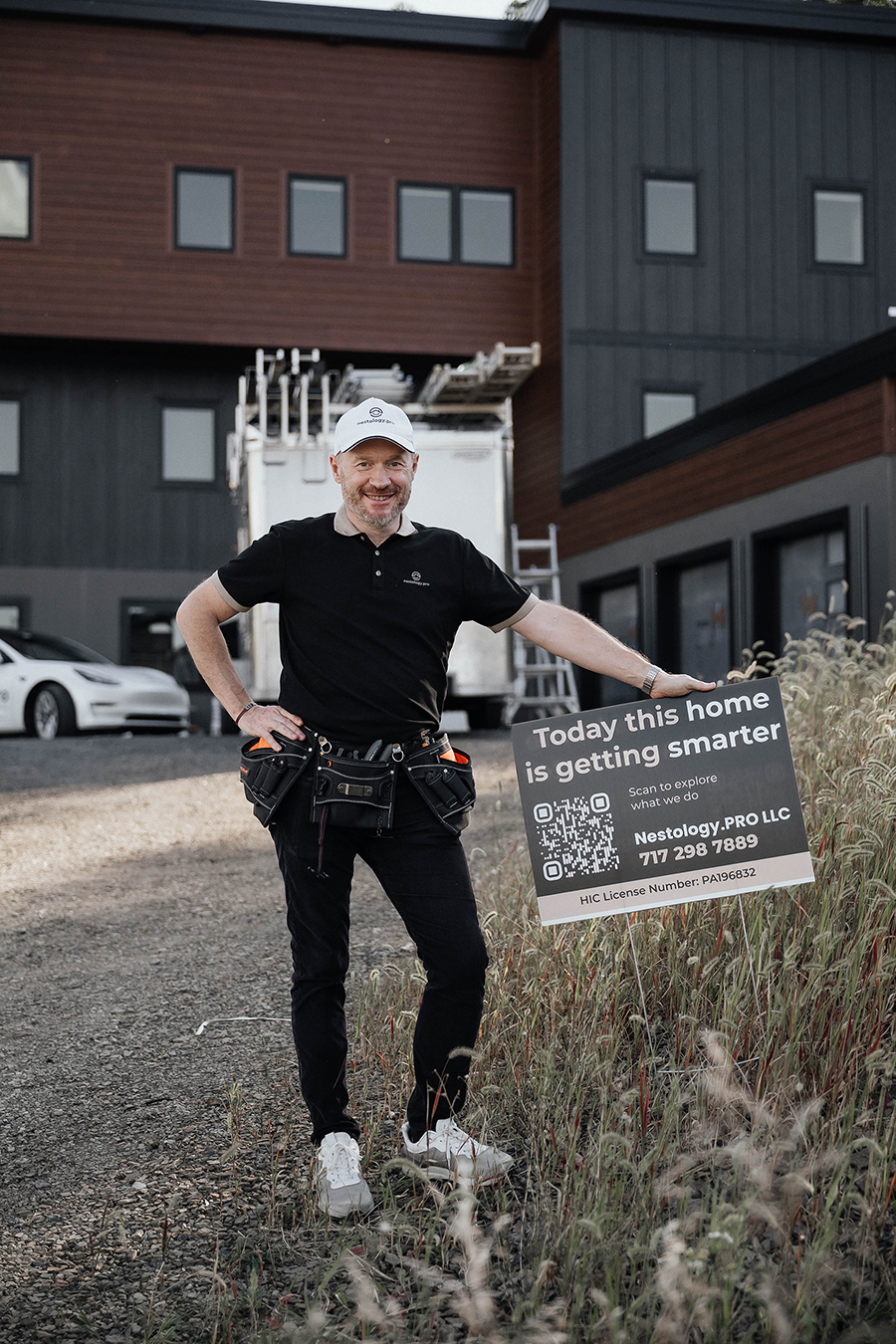
An engineer from Nestology on site during a smart home infrastructure installation in Central Pennsylvania
An engineering-driven residential technology studio explains why system design, not devices, determines long-term smart home stability.
For years, homeowners across the U.S. have described a similar experience: devices that work for a few months before automations begin to fail, lights lose synchronization, or Wi-Fi cameras go offline. While such issues are often blamed on routers or brand compatibility, the company suggests a deeper explanation: most smart homes are built as collections of gadgets rather than cohesive systems.
“Smart homes fail not because of bad devices, but because no one engineered the system behind them,” the Nestology team says. “Our goal is to bring professional system architecture — similar to what is used in data centers — into residential environments.”
The Architecture Problem Behind Unstable Smart Homes
In traditional home automation setups, devices operate independently over a shared home network. That network is rarely designed to handle segmented traffic, synchronized data loads, or long-term scalability. As a result, everyday actions — from voice commands to lighting scenes — can introduce latency, bandwidth competition, and system instability.
According to the company, most failures trace back to missing architectural layers:
- structured network topology
- power planning for critical devices
- secure segmentation between smart systems and personal data
- built-in diagnostics and monitoring
- scalability for future growth
Engineering for Stability and Control
Nestology approaches residential systems as digital ecosystems. The process begins with signal mapping, traffic analysis, and an assessment of existing infrastructure before any hardware is changed.
In many projects, existing devices can be stabilized without replacement. According to the company, the focus is not on adding more technology, but on restoring predictability and reliability.
After optimization, homeowners often report faster response times, consistent automations, and networks that remain stable under heavy use. In this model, stability becomes the core user experience.
Local Control and Privacy
Beyond reliability, the company emphasizes data security and ownership. Many connected devices rely on external servers to perform basic functions, meaning household data frequently travels outside the home.
Nestology says its systems are designed to run locally whenever possible, with cloud services remaining optional. This approach reduces dependence on third-party platforms and limits exposure to outages or data risks.
“Your lights should not depend on a distant server to turn on,” a company engineer says. “Local control protects reliability, privacy, and long-term ownership.”
Network segmentation is also used to isolate systems such as lighting, security, and entertainment, so failures or breaches in one area do not affect others.
From Gadgets to Systems
Industry forecasts suggest tens of millions of connected households across North America in the coming years. As device counts grow, the company warns of a widening “resilience gap,” where innovation moves faster than system design.
In one recent project, a home with more than 40 connected devices experienced recurring outages and daily resets. Instead of replacing equipment, engineers redesigned the network architecture, introduced diagnostics, and isolated failure points. According to the homeowners, the system stabilized without the need for new devices.
The Next Standard in Home Technology
As automation becomes more integrated into daily life, homes increasingly resemble small data infrastructures. The challenge, the company says, is not more connectivity, but better architecture.
The team believes dependable automation should feel calm rather than fragile, and that reliability, privacy, and ownership must be engineered rather than assumed.
About Nestology SmartHome
Nestology SmartHome is a residential technology studio based in Hershey, Pennsylvania, specializing in engineering-first smart home systems that prioritize reliability, privacy, and local control.
For more information, visit https://www.nestology.pro
Nestology.pro
Smart Home Systems Engineering Studio
+1 717-298-7889
contact@nestology.pro
Visit us on social media:
LinkedIn
Instagram
Facebook
Legal Disclaimer:
EIN Presswire provides this news content "as is" without warranty of any kind. We do not accept any responsibility or liability for the accuracy, content, images, videos, licenses, completeness, legality, or reliability of the information contained in this article. If you have any complaints or copyright issues related to this article, kindly contact the author above.
